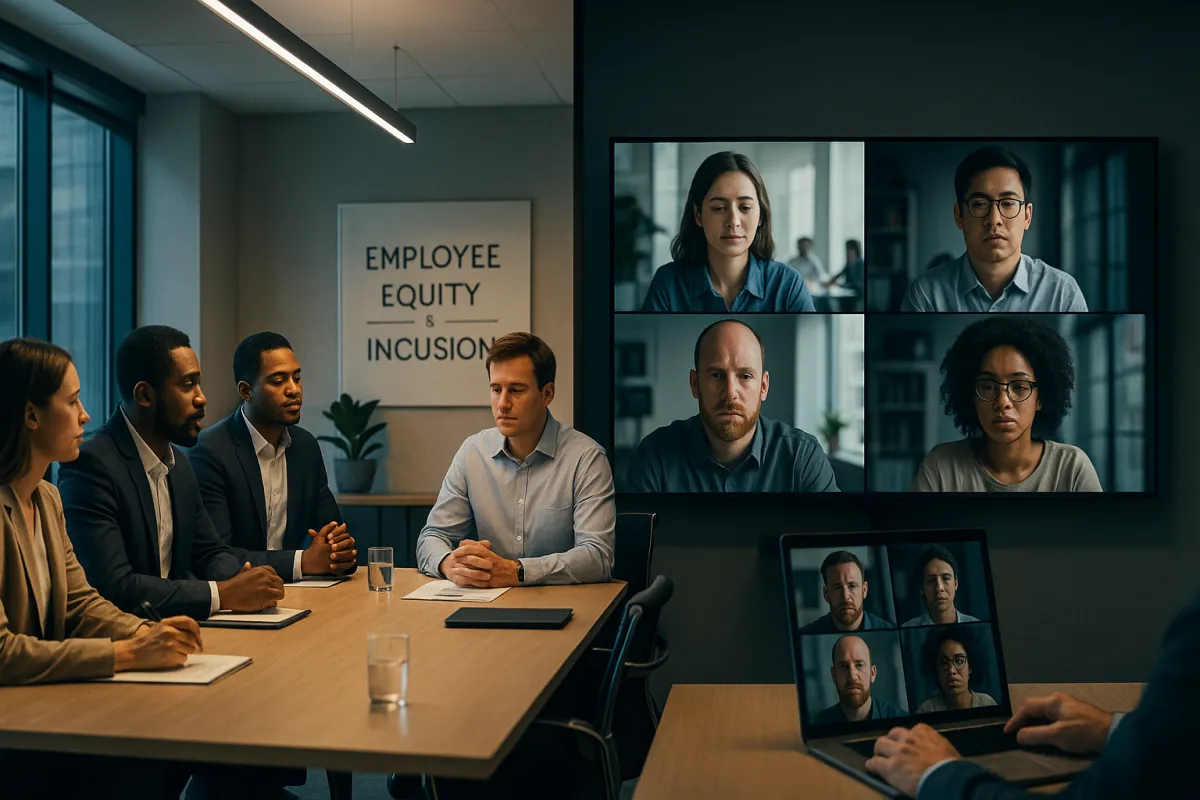
Why Hybrid Without Clarity Breeds Inequity
You’re Offering Flexibility—But Creating Friction
Hybrid work sounds ideal.
Freedom. Balance. Choice.
On paper, it’s the best of both worlds.
In practice, it’s two different worlds entirely.
Because when policies are vague, expectations unclear, and visibility unequal—
Hybrid doesn’t empower.
It divides.
The Hidden Cost of Hybrid Confusion
Your people aren’t frustrated by flexibility.
They’re frustrated by the lack of fairness that comes with it.
• In-office employees get more facetime—and faster promotions.
• Remote workers feel invisible and excluded from decisions.
• Managers apply inconsistent rules about presence and participation.
• Teams drift into two cultures: seen and unseen.
When “flexible” means “unclear,” equity is the first casualty.
You’re Not Just Losing Balance. You’re Losing Belonging.
When employees can’t tell what “showing up” means anymore, they default to self-preservation.
Remote workers overwork to prove their commitment.
In-office employees question why they’re showing up at all.
Managers struggle to measure performance fairly.
The result?
A culture that looks flexible on paper but feels fractured in practice.
Hybrid Doesn’t Need More Perks. It Needs More Precision.
If you think hybrid success comes from tools or technology, you’re missing what really matters: clarity.
The best organizations define hybrid—not just declare it.
That means:
• Setting clear expectations for office presence and collaboration.
• Ensuring visibility for remote employees through intentional leadership.
• Making promotion criteria transparent and location-neutral.
• Equipping managers to lead distributed teams with consistency.
• Measuring outcomes, not attendance.
Hybrid isn’t just a schedule.
It’s a system—and it needs structure.
What Equitable Hybrid Culture Looks Like
A culture where:
Fairness—success doesn’t depend on proximity.
Clarity—everyone knows what’s expected and why.
Inclusion—remote and in-office voices carry equal weight.
Trust—leaders evaluate contribution, not convenience.
When hybrid is guided by clarity, it becomes an advantage—not a liability.
The Cost of Leaving Hybrid Undefined?
Inequity.
Resentment.
A divided culture where flexibility fuels frustration instead of freedom.
Because fairness doesn’t happen by accident—it’s designed.
Want to Build a Hybrid Culture That Works for Everyone?
We help leaders create hybrid systems that balance autonomy with equity—so every employee can thrive, no matter where they work.
📞 Book a 15-minute no-obligation call
📧 Or email us at [email protected]
Let’s make hybrid your company’s advantage—not its divide.
