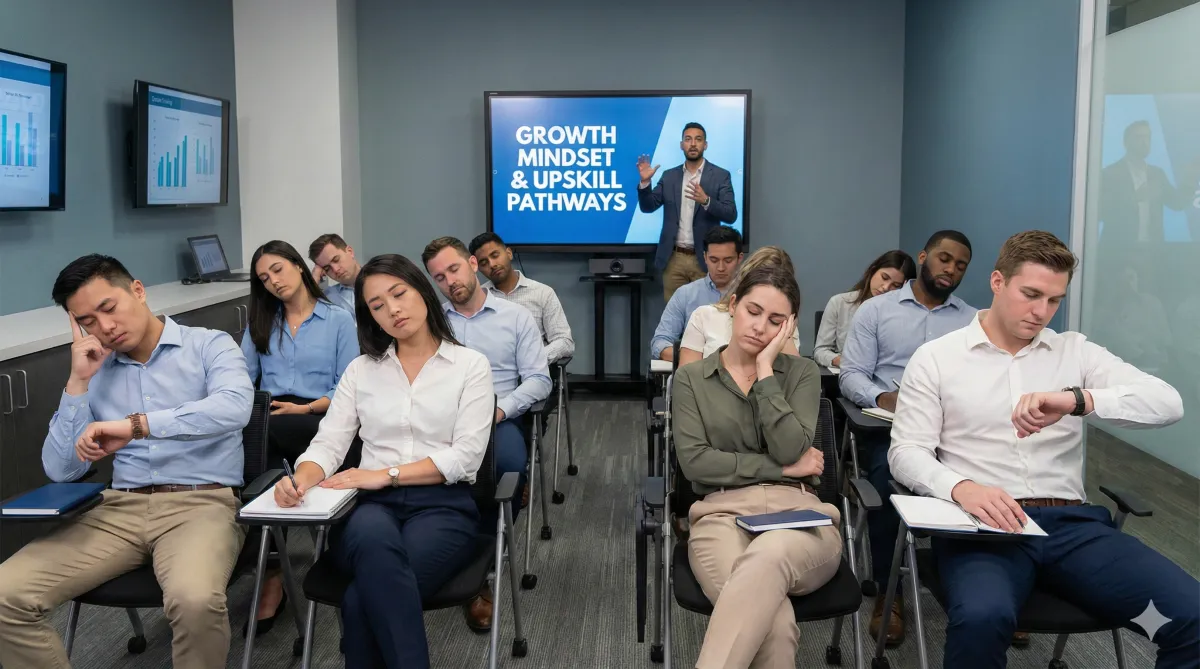
Training Fatigue Is Real, And It’s Costing You Talent
You’re Adding More Training, But Your People Are Already Drowning
January is the corporate Super Bowl of training.
New programs.
New workshops.
New skill mandates.
New learning platforms.
New “required” modules.
But here’s the truth:
More training doesn’t create more capability.
It creates more fatigue.
Your people aren’t resisting learning.
They’re resisting overload.
Training Fatigue Isn’t Lack of Motivation—It’s Lack of Capacity
When employees face constant training demands, they experience:
• divided focus
• cognitive burnout
• reduced productivity
• frustration
• misalignment
• disengagement
• resentment toward leadership
Training becomes noise, not development.
And when everything is “required,”
nothing feels meaningful.
The Hidden Problem: Leaders Aren’t Fixing the System — They’re Adding to It
Organizations respond to performance gaps by adding more training.
But most performance issues aren’t learning issues—
they’re:
• culture issues
• communication issues
• leadership issues
• workload issues
• process issues
• clarity issues
Training won’t fix the very system that created the problem.
When Training Backfires, You Lose Your Best People
Your high performers do the most training.
They carry the most responsibilities.
They experience the most pressure.
And in January, they’re the first to burn out because they’re:
• learning new systems
• onboarding new expectations
• absorbing more content than they can use
• handling heavier workloads
• receiving mixed messages from leadership
You can’t overload your best people and expect long-term loyalty.
The Training That Works in 2025 Is the Training That
Simplifies
The organizations winning the leadership game are doing one thing differently:
They reduce training volume and increase behavioral impact.
Here’s what that looks like.
The Anti-Fatigue Training Blueprint
1. Audit every training and remove what doesn’t drive behavior change.
If it doesn’t change how people work—
cut it.
2. Replace “more modules” with “fewer, deeper skills.”
Mastery beats scatter.
3. Avoid launching new platforms without solving existing problems first.
Tech fatigue is real.
4. Integrate training into workflow—not as extra work.
Learning should reduce effort, not add to it.
5. Train managers on coaching, not just compliance.
Employees don’t need more content.
They need more guidance.
6. Focus on application, not attendance.
Certificates don’t equal skill.
7. Pace development throughout the year.
Not everything needs to happen in January.
What Healthy Training Feels Like
Clear
Supportive
Relevant
Rooted in reality
Connected to behavior
Tied to team goals
Emotionally sustainable
Training should energize your people—
not drain them.
The Cost of Training Fatigue?
Your talent checks out.
Your learning budget goes to waste.
Your culture becomes resentful.
Your performance stagnates.
Your top employees leave.
Training should solve problems—
not create new ones.
Want to Build a Training Strategy That Actually Improves Performance?
We help organizations strip away noise and build evidence-based training that drives real behavior change.
Schedule a Strategic Diagnostic
📧 Or email us at [email protected]
Less training.
More transformation.
