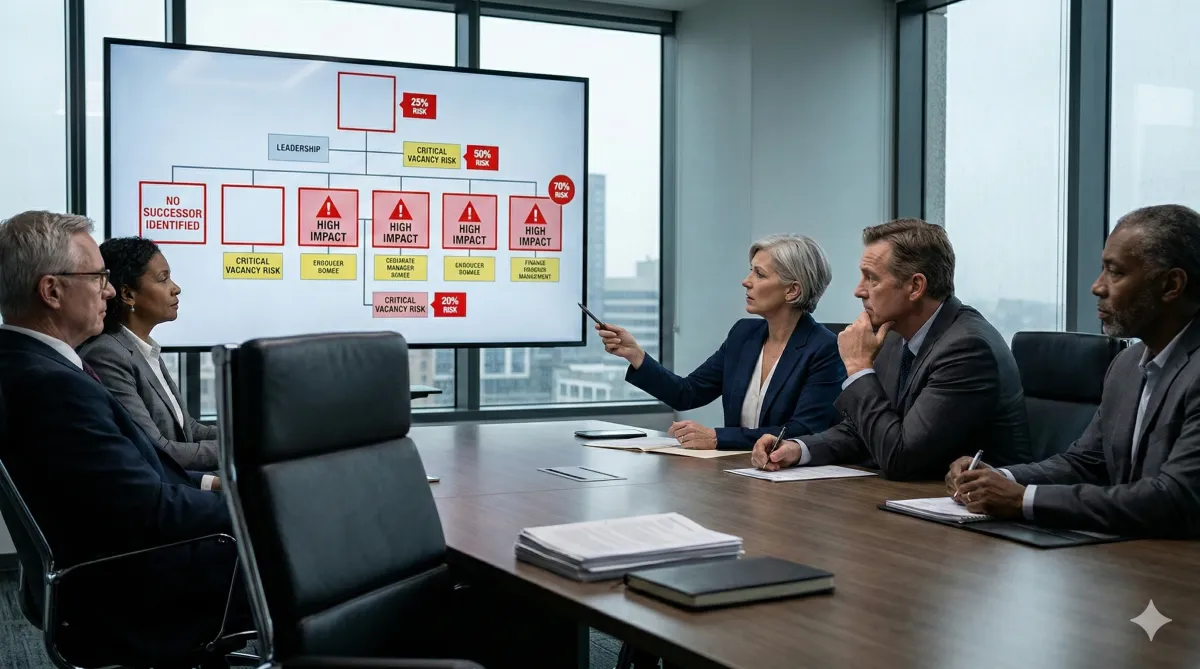
Succession Planning Isn’t About Replacement—It’s About Risk Exposure
Most Succession Plans Are Just Emergency Contact Lists
Ask most organizations about succession planning and you’ll hear:
“We have a backup.”
“We’ve identified high potentials.”
“We know who would step in.”
But real succession planning isn’t about naming a replacement.
It’s about answering one uncomfortable question:
What happens to performance, culture, and strategy if this person leaves tomorrow?
If the honest answer is “significant disruption,”
you don’t have succession planning.
You have risk exposure.
Succession Isn’t About Titles—It’s About Capability Depth
When a leader exits, what truly walks out the door?
• Decision-making judgment
• Institutional memory
• Political capital
• Cross-functional trust
• Strategic foresight
• Informal influence
• Cultural stability
Replacing a job description doesn’t replace those things.
And if they exist in only one person, your system is fragile.
The Myth: “We’ll Deal With It If It Happens”
Organizations often delay succession planning because:
• turnover hasn’t happened yet
• leaders feel secure
• performance looks stable
• bench talent seems “good enough”
• development feels expensive
• visibility into risk is low
But succession risk doesn’t announce itself.
It shows up suddenly—
in resignations, burnout, restructures, health events, or external offers.
And by then, it’s too late to build depth.
Succession Planning Is Risk Management
Strong organizations treat succession planning like cybersecurity.
They assume vulnerability exists.
They assess exposure honestly.
They test system resilience.
They strengthen weak links.
They don’t wait for a breach to reveal structural weakness.
Signs Your Organization Has Hidden Succession Risk
• Critical decisions funnel through one person
• Leadership pipelines rely on informal favoritism
• Development isn’t tied to strategic capability
• Promotions surprise people
• Knowledge transfer is undocumented
• High performers are “too valuable to move”
• Leadership development is theoretical, not applied
• One departure creates visible instability
These aren’t HR problems.
They’re strategic risks.
What Real Succession Depth Looks Like
It means:
• Leadership capabilities are distributed—not concentrated
• High-impact knowledge is shared—not siloed
• Development plans are tied to business priorities
• Potential leaders are tested through real stretch roles
• Cross-training is intentional
• Successors are developed before vacancies appear
• Bench strength is measured—not assumed
Succession isn’t about names on a chart.
It’s about reducing single points of failure.
This Isn’t Just an Organizational Issue—It’s a Career Signal
For professionals, succession planning reveals something else:
If you are indispensable in your current role, but not developing others, you are not positioned for advancement—you are trapped in place.
True leadership value travels.
If your influence disappears when you do, you haven’t built leverage—you’ve built dependency.
And dependency is fragile.
The Hard Truth Leaders Must Face
Succession planning is uncomfortable because it forces leaders to confront:
• their replaceability
• their development gaps
• their over-reliance on certain individuals
• their lack of leadership depth
• their exposure to unexpected exits
But ignoring it doesn’t remove risk.
It multiplies it.
The Question That Matters
Not:
“Who replaces this role?”
But:
“How exposed are we if this capability disappears?”
Because stability isn’t measured by tenure.
It’s measured by depth.
For Professionals Navigating Growth or Uncertainty
If you’re looking to stand out in performance reviews, reposition yourself during organizational changes, or prepare for leadership opportunities, BBRCM’s Career Advancement Experience is designed to help you build visible leadership value—not just stronger resumes.
This experience focuses on strategic positioning, behavioral insight, and real-world leadership application—so your contribution is recognized, not overlooked.
Many participants pursue this experience through employer sponsorship or professional development reimbursement, positioning it as a leadership investment rather than a personal expense.
Explore the Experience & Sponsorship Options
For Organizations Serious About Measurable Performance and Leadership ROI
If your leadership or workforce initiatives need to move beyond engagement metrics into real, trackable performance outcomes, BBRCM’s Strategic Workforce & Leadership Advisory begins with a paid Strategic Diagnostic—designed to uncover where culture, capability, and execution are misaligned.
This is not a sales call. It’s a working session that delivers a clear performance map, leadership risk indicators, and an executive action pathway that can lead into BBRCM’s Pinnacle Advantage Programs for sustained, measurable impact.
Apply for a Strategic Diagnostic → https://bbrcmllc.com/
