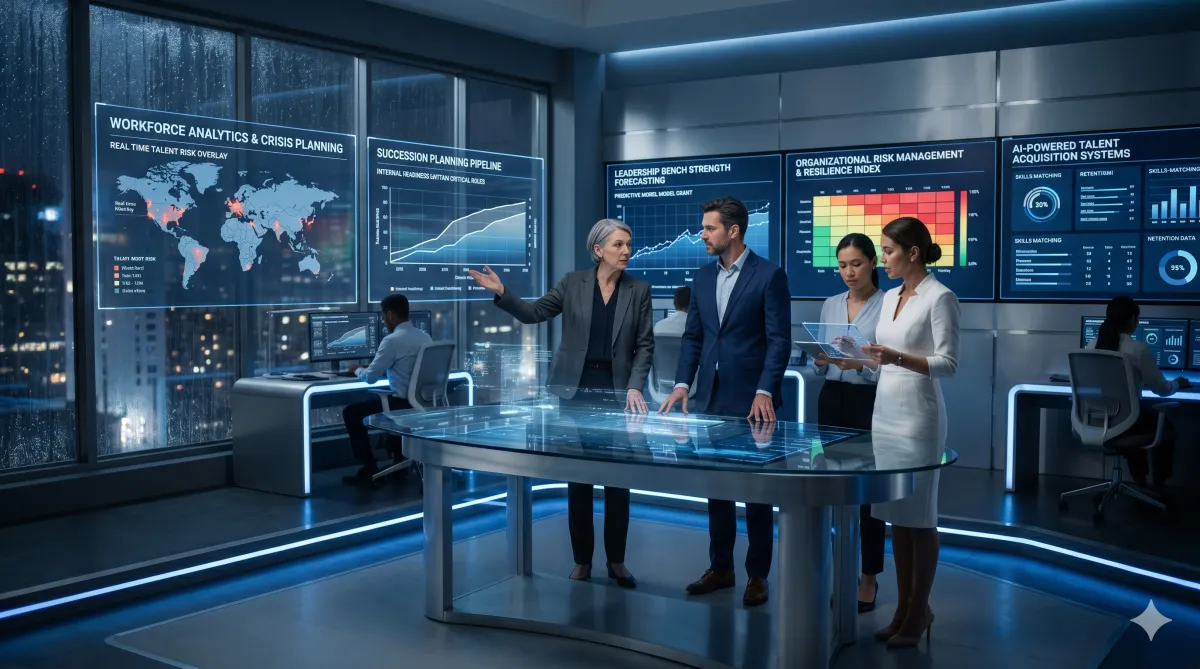
HR Leaders Are About to Become the Architects of Organizational Survival
HR Is Entering Its Most Important Decade
For years, HR has been positioned as:
support
operations
compliance
people management
Necessary—but not central.
That’s changing.
Because in the next decade, organizations won’t fail due to lack of ideas.
They’ll fail due to lack of execution capability.
And execution capability is built through:
people
leadership
structure
alignment
Which places HR at the center of organizational survival.
The Shift From “People Function” to “System Designer”
HR is no longer responsible for managing people.
It is responsible for designing how the organization works.
That includes:
• how teams are structured
• how decisions are made
• how leaders are developed
• how performance is driven
• how culture supports execution
This is not operational work.
It’s architectural.
Why This Shift Is Happening Now
Three forces are converging:
1. AI Is Changing the Nature of Work
Roles are evolving.
Skills are shifting.
Execution is accelerating.
Organizations need someone to:
• redesign work
• align capability with strategy
• manage human + AI collaboration
That’s not a technology problem.
It’s a workforce design problem.
2. Leadership Gaps Are Limiting Growth
Many organizations are facing:
• inconsistent decision-making
• weak leadership pipelines
• lack of readiness for complexity
• overdependence on a few individuals
These issues don’t show up in strategy decks.
But they determine whether strategy succeeds.
3. Organizational Complexity Is Increasing
Cross-functional work is expanding.
Decision-making is becoming decentralized.
Change is constant.
Without strong structure and alignment, execution slows.
And complexity turns into confusion.
What “Architect of Organizational Survival” Actually Means
It means HR must take ownership of:
Workforce Strategy
• defining what capabilities the organization needs
• aligning talent with future direction
• planning beyond immediate hiring needs
Leadership Development
• building decision-making capability
• preparing leaders for complexity
• strengthening pipelines intentionally
Organizational Design
• structuring teams for speed and clarity
• reducing friction across functions
• aligning roles with outcomes
Performance Systems
• ensuring accountability is consistent
• linking effort to results
• driving measurable outcomes
Cultural Alignment
• reinforcing behaviors that support execution
• identifying misalignment early
• maintaining clarity under pressure
This is not support work.
This is organizational control and direction.
The Risk of Not Evolving HR
Organizations that keep HR in a traditional role will experience:
• misaligned workforce capability
• leadership bottlenecks
• slow execution
• inconsistent performance
• higher attrition
• reduced ability to adapt
And they’ll struggle to identify the root cause.
The Leadership Blind Spot
Executives often invest in:
strategy
technology
growth initiatives
But underinvest in:
• workforce capability
• leadership development
• organizational structure
That imbalance limits execution.
And no strategy survives poor execution.
What Forward-Thinking Organizations Are Doing
They are:
• elevating HR into strategic decision-making
• aligning HR metrics with business outcomes
• investing in leadership capability as infrastructure
• redesigning organizations for speed and adaptability
• treating workforce strategy as core to business strategy
They don’t ask HR to support survival.
They rely on HR to design it.
The Professional Reality for HR Leaders
This is a defining moment.
You can remain:
process-focused
operational
reactive
Or you can step into:
• strategic influence
• organizational design
• leadership development
• business impact
Because the role is changing—with or without you.
The Hard Truth
In the next decade, organizations won’t fail because they lacked talent.
They’ll fail because they didn’t structure, develop, and align that talent effectively.
The Question Leaders Must Ask
Not:
“Is HR running efficiently?”
But:
“Is HR helping us build an organization that can survive—and win—under increasing complexity?”
Because survival is no longer about stability.
It’s about adaptability.
And adaptability must be designed.
Ready to Strengthen Your Workforce Strategy?
Today’s HR leaders are being asked to do more than ever before—retain talent, improve culture, develop leaders, manage change, and prepare for the impact of AI.
You do not have to figure it all out alone.
BBRCM helps organizations build stronger leadership, smarter workforce strategies, healthier cultures, and HR systems that are ready for the future.
Visit BBRCM LLC’s HR page to learn more: https://bbrcmllc.com/hr
Or email [email protected] to start the conversation.
