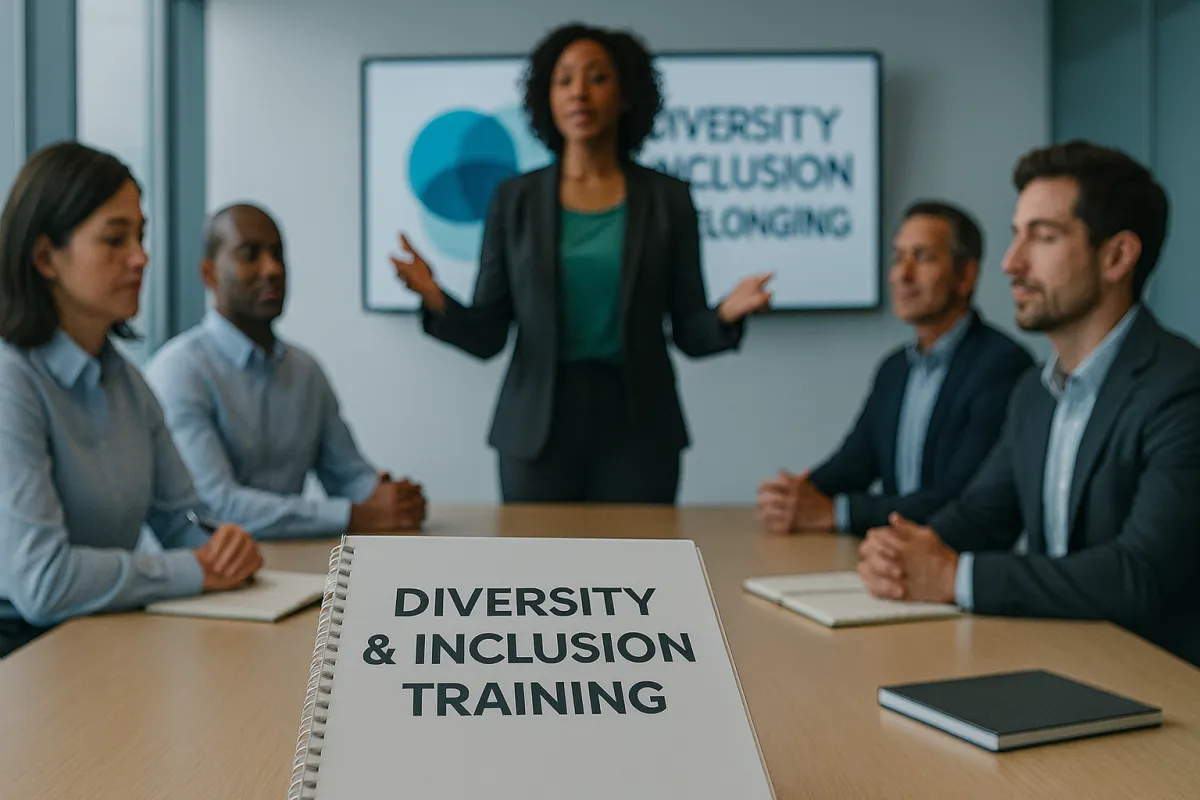
You Can’t Diversity-Train Your Way Out of Inequity
You’re Training Awareness—But Not Changing Systems
Diversity seminars.
Bias workshops.
“Courageous conversations.”
On paper, it’s progress.
In practice, it’s performance.
Because while organizations are pouring money into DEI training, they’re often ignoring the deeper issue—
The system itself.
Workshops may change minds for a moment.
But without policy reform, they don’t change outcomes.
The Hidden Cost of Performative Inclusion
Your employees aren’t against training.
They’re against hypocrisy.
• Teams hear “inclusion” but see the same people getting promoted.
• Leadership talks about equity—but budgets say otherwise.
• HR rolls out initiatives that educate feelings, not fix frameworks.
So while executives check off attendance boxes, employees check out emotionally.
Because awareness without action isn’t growth—it’s theater.
You’re Not Just Losing Impact. You’re Losing Integrity.
When employees see performative DEI efforts, they don’t stay silent out of agreement—they stay silent out of exhaustion.
They’ve seen the statements.
They’ve taken the workshops.
They’re still waiting for something to change.
Trust doesn’t erode because of what’s said.
It erodes because of what never happens afterward.
Inclusion Isn’t an Event. It’s Infrastructure.
If you think training alone builds equity, you’re missing the real work: reengineering systems that hold bias in place.
The best organizations go beyond awareness—they institutionalize fairness.
That means:
• Auditing pay, promotions, and performance processes for equity gaps.
• Tying leadership bonuses to measurable inclusion outcomes.
• Diversifying who holds decision-making power—not just who’s in the training.
• Embedding accountability into culture, not just calendar invites.
• Communicating transparently about progress—and where it still falls short.
Inclusion isn’t taught in a classroom. It’s built into the company’s DNA.
What Real Equity Looks Like
A culture where:
Accountability—leaders are responsible for closing equity gaps.
Transparency—data on diversity and outcomes is shared openly.
Consistency—policies reflect fairness, not favoritism.
Representation—decision tables reflect the people served.
When inclusion is systemic, trust becomes cultural—not conditional.
The Cost of Mistaking Training for Change?
Employee cynicism.
Tokenism fatigue.
A reputation for caring—but not committing.
Because diversity statements might inspire headlines—but systems inspire loyalty.
Want to Build Equity That Lasts Beyond the Workshop?
We help leaders turn awareness into action—designing policies that make inclusion measurable, accountable, and real.
📞 Book a 15-minute no-obligation call
📧 Or email us at [email protected]
Let’s move DEI from PowerPoint to policy—and rebuild trust where it matters most.
