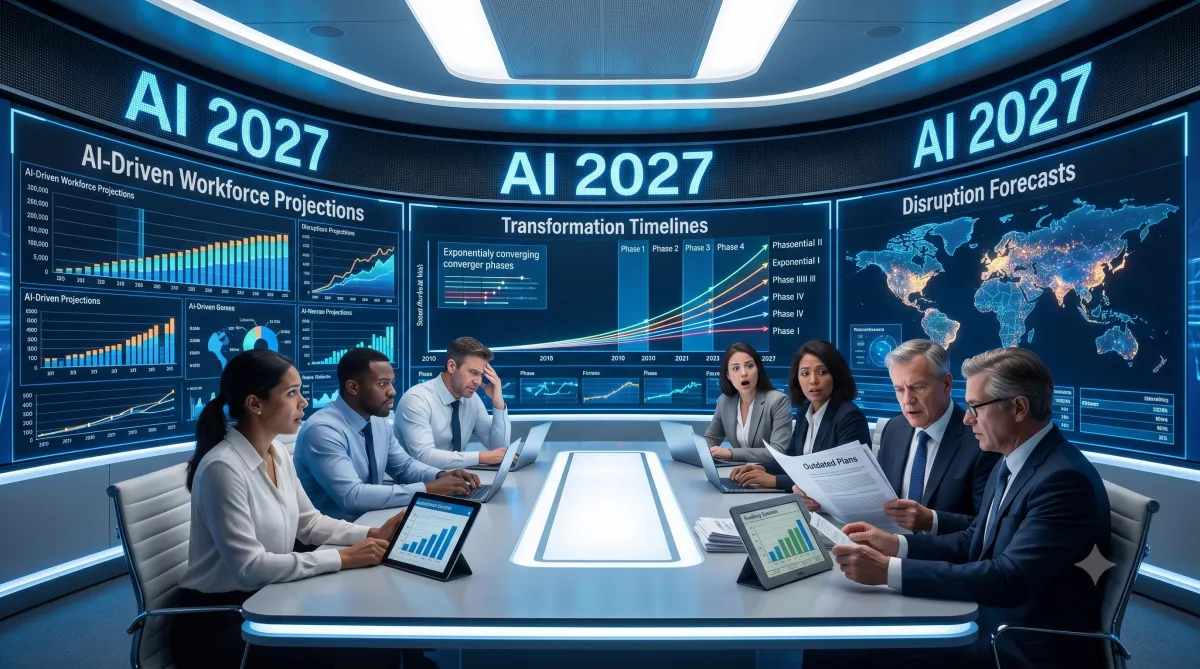
AI 2027 Is Closer Than Your Organization Is Prepared For
Most Organizations Still Think They Have Time
Many leadership teams are treating AI like a future initiative.
Something to monitor, experiment with, gradually explore, and fully address later.
But the reality is much more uncomfortable:
2027 is not far away.
And the organizations waiting for “the right time” to prepare are already behind.
AI Adoption Is Moving Faster Than Corporate Planning Cycles
Most organizations still operate on slow transformation timelines involving annual planning cycles, phased operational changes, gradual workforce development, and long approval structures.
AI does not move that way.
AI capabilities are evolving monthly, weekly, and sometimes daily.
Which means many organizations are trying to govern exponential change with linear planning models.
That gap is becoming dangerous.
The Next Two Years Will Reshape Workforce Expectations
By 2027, employees will expect AI integration in communication, workflow execution, reporting, analytics, training, decision support, and operational systems.
Organizations without structured AI strategies will appear outdated internally and externally.
And workforce frustration will increase quickly.
The Competitive Gap Is About to Widen
Right now, many companies still appear relatively equal in AI maturity.
That will not last.
Over the next two years, organizations will separate into two groups.
Group 1:
Companies using AI strategically through workforce alignment, governance, operational redesign, leadership readiness, and structured adoption plans.
Group 2:
Companies reacting to AI through fragmented experimentation, unclear policies, operational confusion, inconsistent implementation, and reactive leadership decisions.
The performance gap between these groups will widen aggressively.
AI 2027 Is Not Just About Technology
This is where many leaders are miscalculating.
AI 2027 is not primarily a technology story.
It is a workforce story, leadership story, operational story, governance story, and organizational strategy story.
Because AI changes how work flows, how decisions happen, how teams collaborate, how leadership operates, and how performance is measured.
Organizations that fail to prepare structurally will struggle operationally.
HR and Leadership Teams Are Not Ready Yet
Most organizations still lack AI governance frameworks, workforce communication strategies, leadership alignment, operational redesign planning, role evolution strategies, and AI accountability standards.
And many HR teams are already overloaded managing today’s operational pressure.
Now AI transformation is being layered on top.
The Biggest Risk Is Delayed Clarity
One of the most dangerous leadership assumptions right now is:
“We’ll figure it out as AI evolves.”
But delayed clarity creates inconsistent execution, workforce confusion, leadership misalignment, policy gaps, and operational instability.
Organizations that wait too long will spend years catching up operationally.
AI Will Accelerate Organizational Exposure
Weaknesses that once stayed hidden for years will become visible much faster.
AI will expose poor leadership alignment, inefficient workflows, communication breakdowns, unclear accountability, workforce capability gaps, and governance weaknesses.
Faster systems reveal organizational flaws faster.
What Smart Organizations Are Doing Right Now
Forward-thinking companies are already building AI governance structures, aligning leadership teams, redesigning workflows, assessing workforce readiness, involving HR and Legal early, preparing long-term workforce strategies, and defining operational safeguards.
They are not preparing for today’s AI.
They are preparing for where AI will be in two years.
The Organizations That Will Struggle Most
The companies most at risk are the ones treating AI casually, waiting for certainty before acting, separating AI from workforce strategy, underestimating operational impact, and assuming leadership alignment will happen naturally.
Because AI transformation punishes slow alignment.
The Hard Truth
By 2027, many organizations will realize they underestimated how quickly AI would reshape operational expectations.
And by then, the adjustment will be far more expensive.
The Question Leaders Must Ask
Not:
“Are we experimenting with AI?”
But:
“Are we structurally preparing the organization for what AI will require over the next two years?”
Because the future advantage will belong to organizations that prepared before pressure forced them to.
Ready to Strengthen Your Workforce Strategy and Reduce HR Pressure?
Today’s HR leaders are being asked to do more than ever before: retain talent, improve culture, develop leaders, manage change, reduce operational strain, and prepare for the growing impact of AI.
But when HR is overloaded with constant employee escalations, leadership inconsistency, competing priorities, and reactive workflows, strategic progress slows.
You do not have to figure it all out alone.
BBRCM helps organizations reduce HR and leadership pressure, strengthen workforce strategy, improve organizational clarity, restore leadership accountability, and build healthier, future-ready HR systems.
BBRCM’s HR & Leadership Pressure Audit™ is designed to help organizations move from pressure to clarity to control, allowing HR teams and leadership to regain focus, reduce strain, and execute strategically.
Low lift on your team. High impact insights. Immediate relief.
Visit BBRCM LLC’s HR page to learn more about the HR & Leadership Pressure Audit™, pricing, and next steps:
https://bbrcmllc.com/hr
📧 Or email [email protected] to start the conversation.
